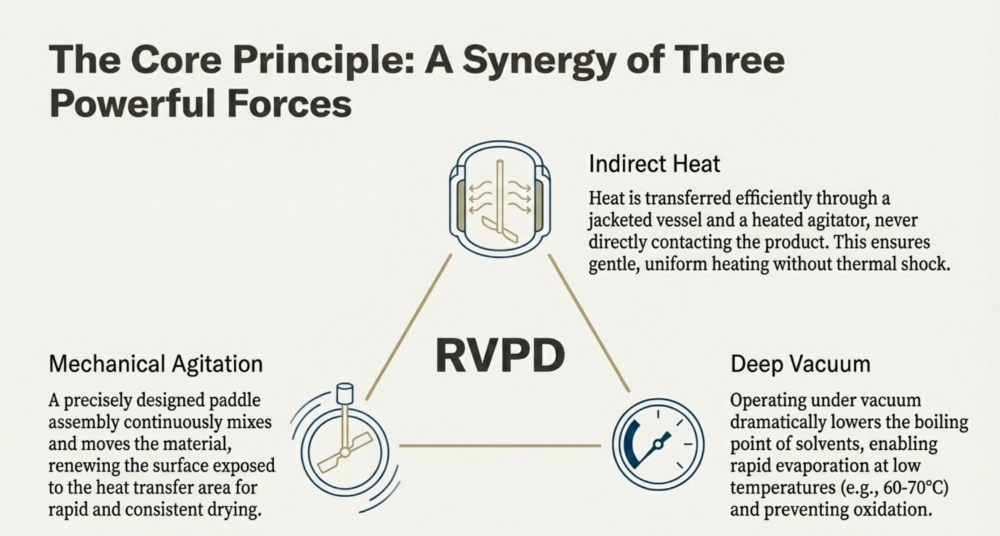
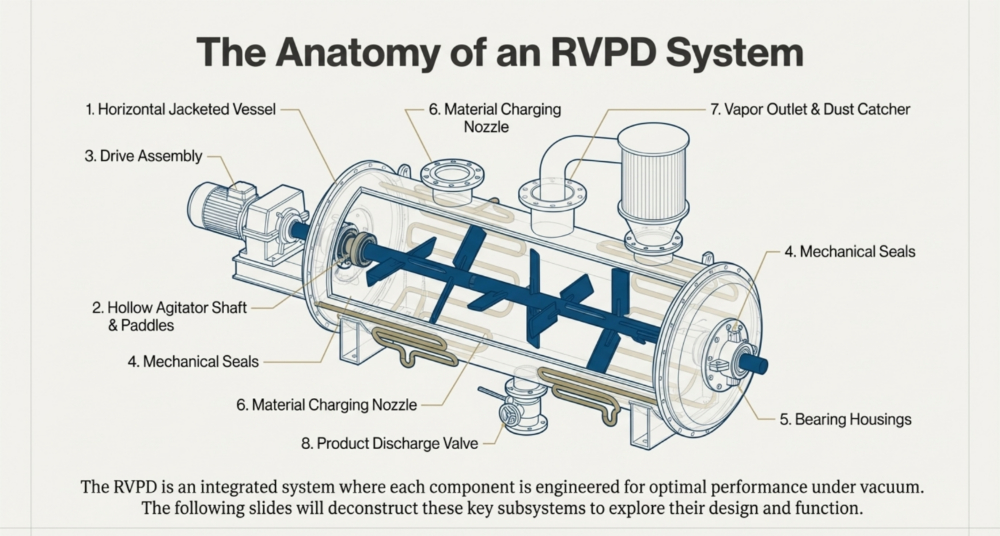
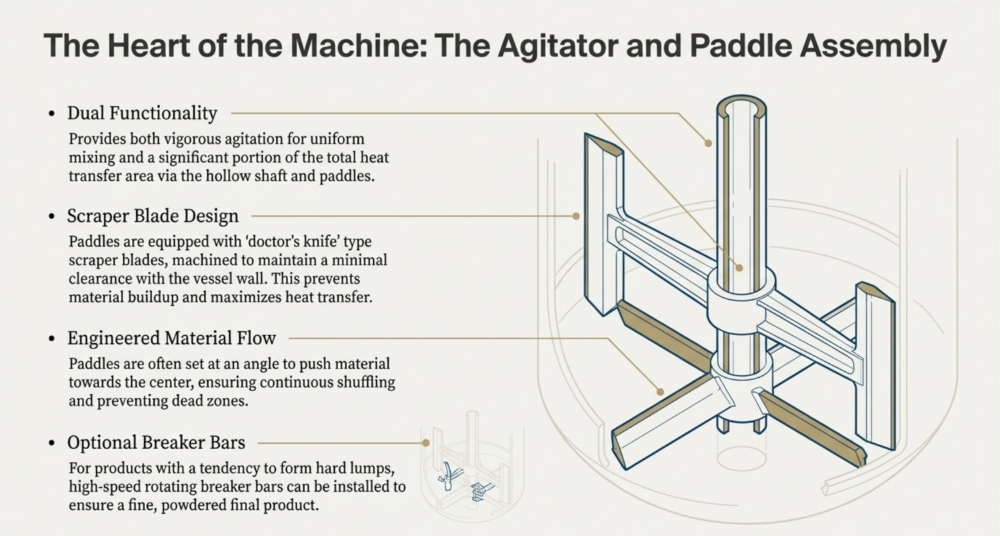
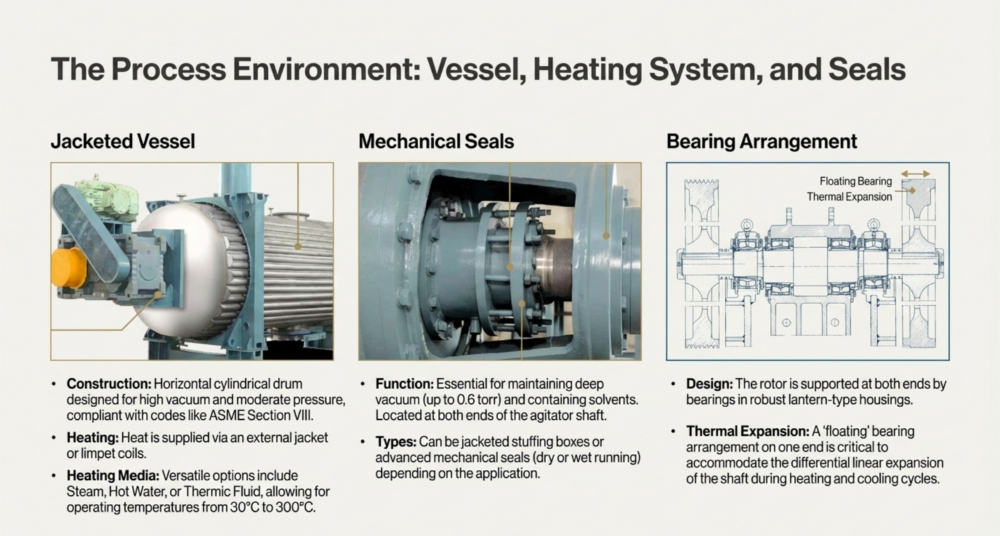
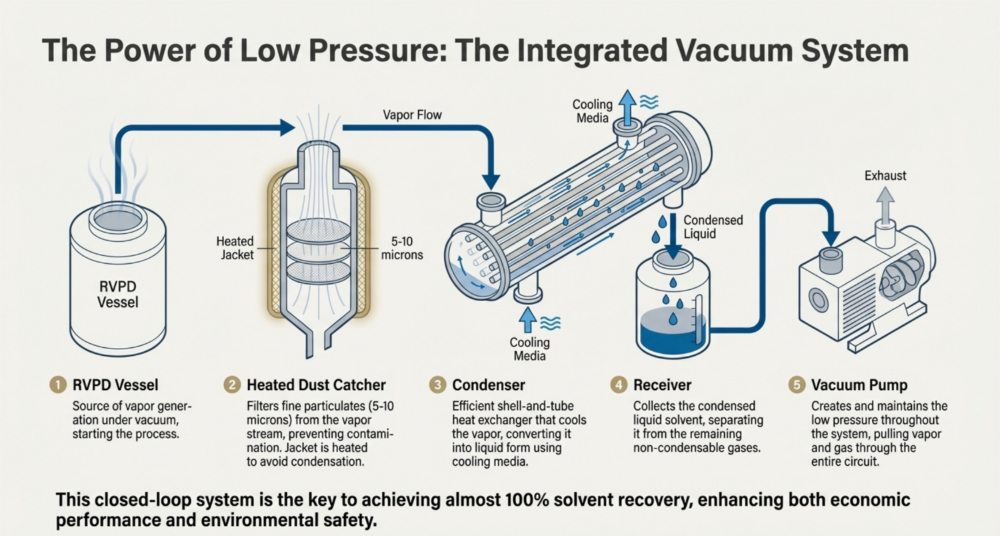
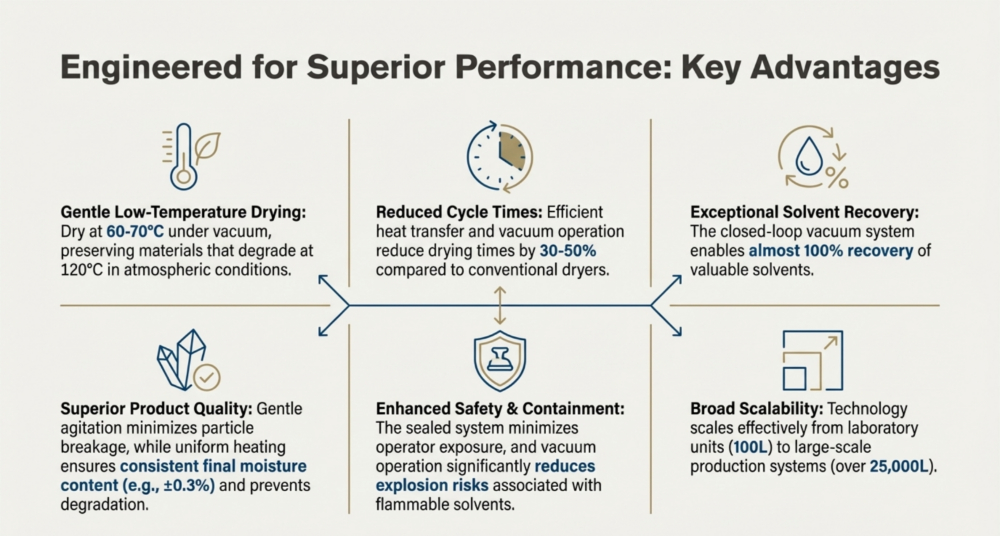
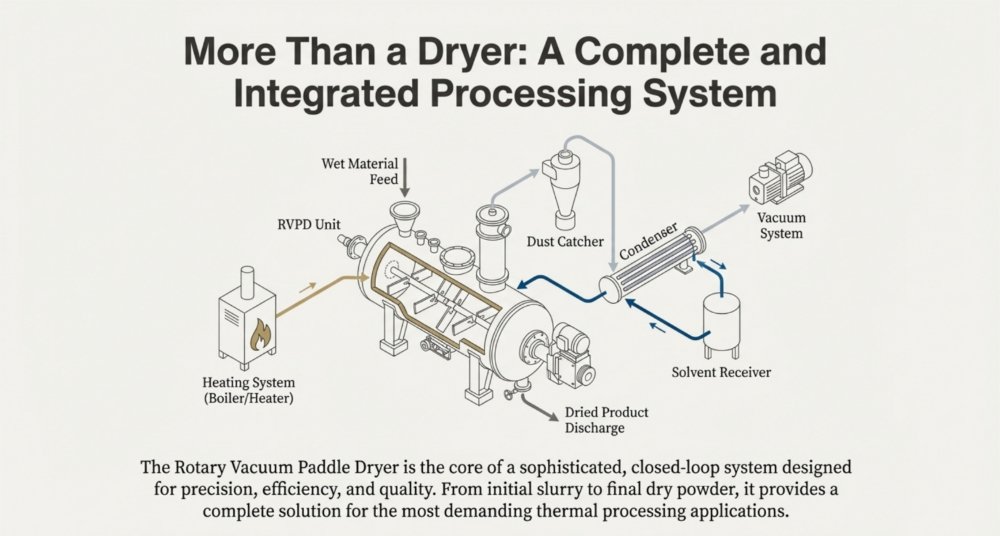
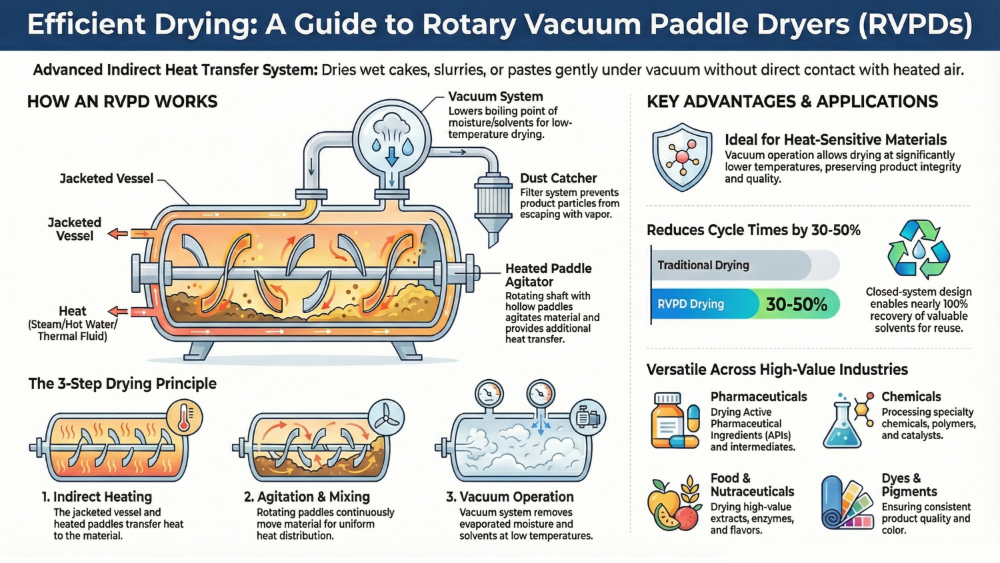
The ancillary and utility systems act as the essential life support for the Rotary Vacuum Paddle Dryer (RVPD), creating the specific environmental conditions required for efficient drying. The vacuum system is typically described as the “heart of the system,” comprising a vacuum pump (such as a water ring, oil seal, or screw pump), a shell and tube condenser, and a receiver to lower the boiling point of solvents, thereby enabling gentle drying at reduced temperatures,,. Simultaneously, the heating utility circulates thermal media—such as steam, hot water, or thermic fluid—through the vessel’s jacket, limpet coils, and hollow agitator shaft to provide indirect heat transfer, with fuel options ranging from natural gas to electricity depending on availability,,,.
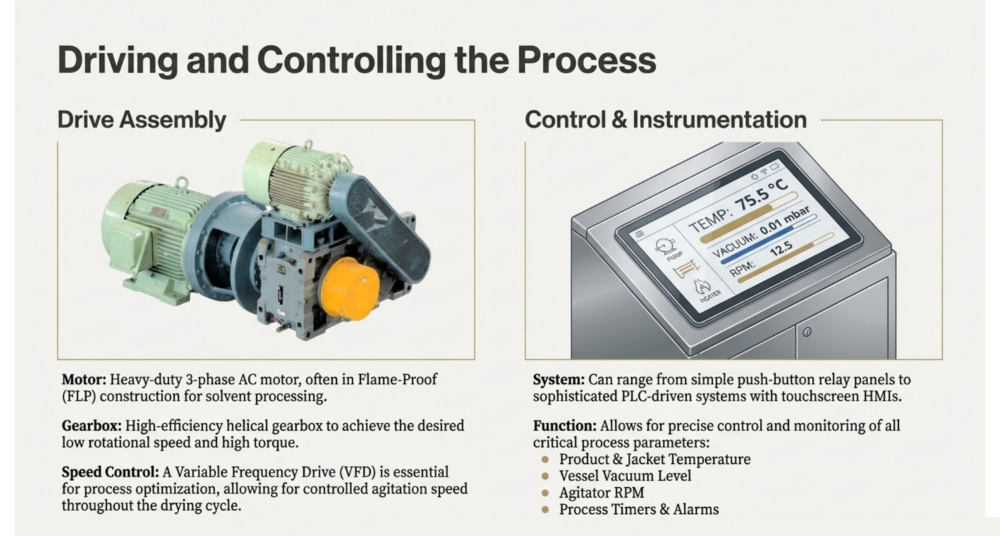
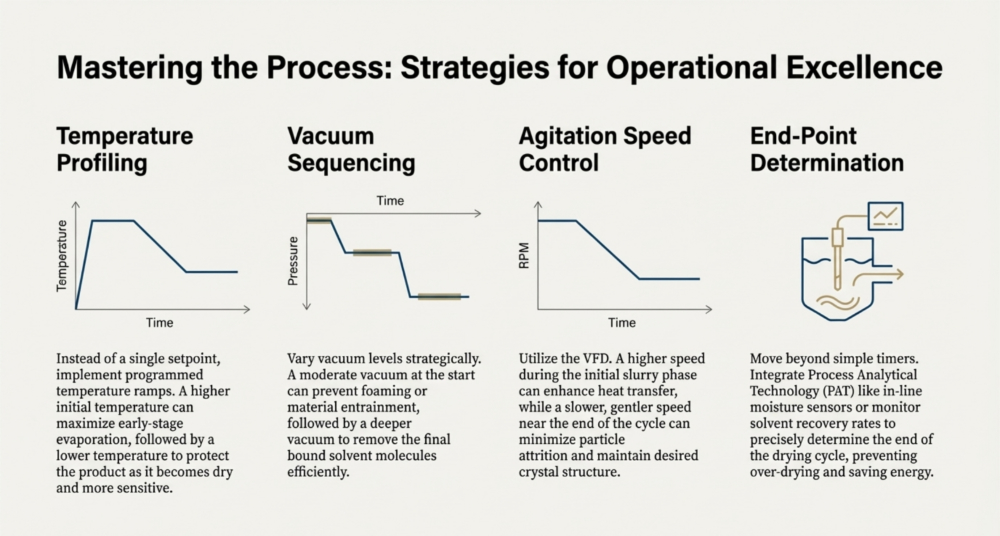
To ensure operational efficiency and product recovery, these primary utilities are supported by critical accessories like the dust catcher and advanced control systems. The dust catcher, often a jacketed filter housing mounted on top of the vessel, arrests airborne powder particles to prevent them from entering the vacuum system, frequently utilizing nitrogen pulsation to return the product directly to the dryer,,. The entire process is managed by an operating panel—typically housing Variable Frequency Drives (VFDs) and PLC-driven touch screens—which is often located in a separate “utility section area” to maintain safety and hygiene standards while precisely regulating agitation speeds and temperature profiles,.