ZERO LIQUID DISCHARGE PLANT
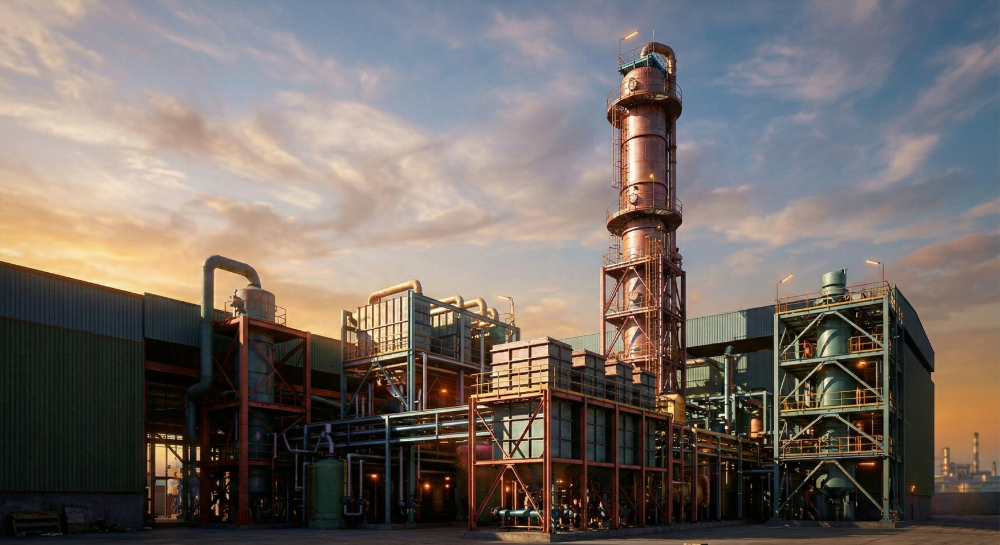
Introduction: What is Zero Liquid Discharge?
Zero Liquid Discharge (ZLD) is a cutting-edge wastewater treatment process designed to completely eliminate all liquid waste discharge from an industrial system. The primary goal of ZLD is to economically process wastewater, reduce its volume, and produce a clean water stream suitable for reuse, leaving behind only solid waste or a highly concentrated brine.
How Does a ZLD System Work?
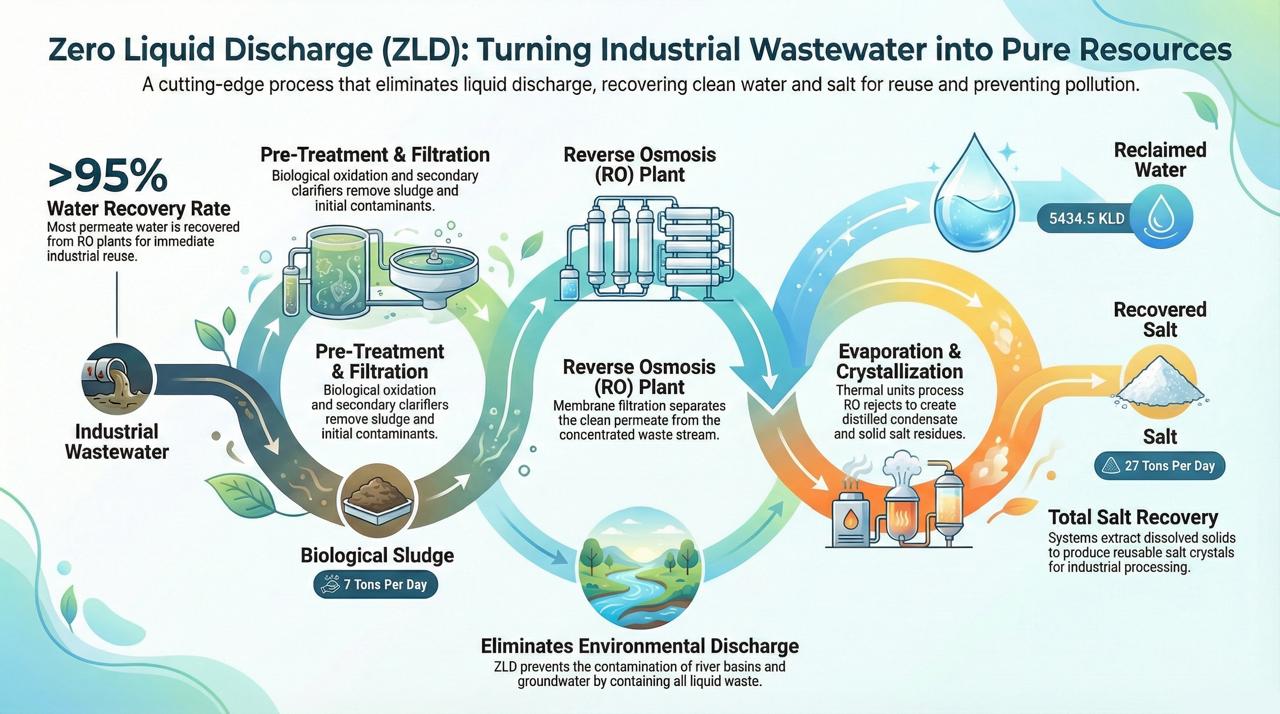
A well-designed ZLD system treats wastewater in stages, systematically recovering water and isolating contaminants. The core process typically includes the following steps:
- Pre-treatment: This initial phase removes large particles, oil, suspended solids, and hardness (like metals and silica) using clarifiers and filtration. Proper pre-treatment is essential to prevent scaling and fouling in later equipment.
- Concentration: Membrane-based technologies, primarily Reverse Osmosis (RO) or Electrodialysis, are used to remove the bulk of dissolved solids and recover a large percentage (often 60–80%) of the water.
- Evaporation: The concentrated reject water (brine) is then sent to thermal evaporators (such as Mechanical Vapor Recompression or Multiple Effect Evaporators). This vaporizes excess water, further concentrating the waste and recovering the condensate for reuse.
- Crystallization and Dewatering: In the final step, a crystallizer boils off the remaining liquid until the impurities form solid crystals. The mixture is then processed in a filter press or centrifuge to squeeze out the last bits of moisture, yielding a dry, solid cake for safe disposal or resource recovery.
Why Implement ZLD? (Key Benefits)
As environmental concerns grow and fresh water becomes scarcer, ZLD offers several critical advantages for industrial facilities:
- Water Conservation: ZLD systems can recover up to 95–100% of wastewater for reuse in the facility, significantly reducing dependency on local freshwater sources.
- Regulatory Compliance: Regulators are enforcing stricter wastewater discharge limits. ZLD ensures compliance by eliminating liquid effluent entirely, helping facilities avoid hefty fines and legal liabilities.
- Resource Recovery: ZLD infrastructure allows industries to extract and monetize valuable byproducts from the waste stream, such as salts (e.g., sodium chloride), minerals, and metals, supporting a circular economy.
- Elimination of Discharge Fees: For facilities operating in areas with astronomical discharge rates or surcharges, ZLD eliminates the high recurring costs associated with municipal sewer disposal.
Common Challenges & Solutions in ZLD
While highly beneficial, implementing ZLD comes with technical and operational challenges:
- Fouling and Scaling: The accumulation of organic matter, bacteria, or mineral precipitation (like calcium sulfate) can block membranes and damage thermal evaporators.
Solution: Implementing robust pre-treatment (like cold-lime softening), utilizing anti-fouling membranes, and strictly controlling the balance of Total Suspended Solids (TSS) to Total Dissolved Solids (TDS).
- High Energy Consumption: The thermal evaporation and crystallization phases require substantial energy.
- Solution: Maximizing the use of energy-efficient membrane processes (like RO) early on to reduce the volume of water that must be boiled, and integrating renewable or waste heat sources where possible.
- Equipment Corrosion: High salt concentrates and brine can rapidly break down piping and mechanical components.
- Solution: Utilizing highly resistant construction materials such as Titanium for heat exchangers and engineered plastics (UPVC/CPVC) for pipework.
How to Choose and Implement the Right ZLD System
ZLD systems are not one-size-fits-all; they require high initial capital and must be customized based on a facility’s specific effluent.
- Conduct a Cost-Benefit Analysis (CBA): Calculate the capital, operation, and maintenance costs against the financial benefits, such as savings on fresh water procurement, elimination of discharge fees, and potential revenue from recovered salts. Calculate the Net Present Value (NPV) to determine long-term financial viability.
- Perform Treatability & Pilot Testing: Before investing, conduct thorough treatability studies and field pilot tests. This identifies the exact contaminants in your wastewater and validates the technology design, ensuring the final system operates reliably without unexpected fouling or scaling.
- Evaluate Modular Options: Consider prepackaged, modular ZLD systems. These can be manufactured off-site and assembled quickly, reducing field construction time, lowering installation costs, and allowing for easy capacity expansion in the future.

With our view to meet with the growing demands of fabrication and engineering industry, we, Rahul Engineers, have become a leading business entity engaged in manufacturing
Our Products.
Important Links.
- About Rahul Engineer.
- Contact Rahul Engineer.
- Download Brochure
- Privacy Policy
- Website Credit
Contact Info.
- Plot No: DG 57 & DG 54, Dungra Garment Zone, GIDC Vapi - 396 191 - Gujarat (India)
-
+91 97241 93241
+91 85077 77793 - info@rahulengineers.in
- sales@rahulengineers.in
© 2026 RahulEngineers.